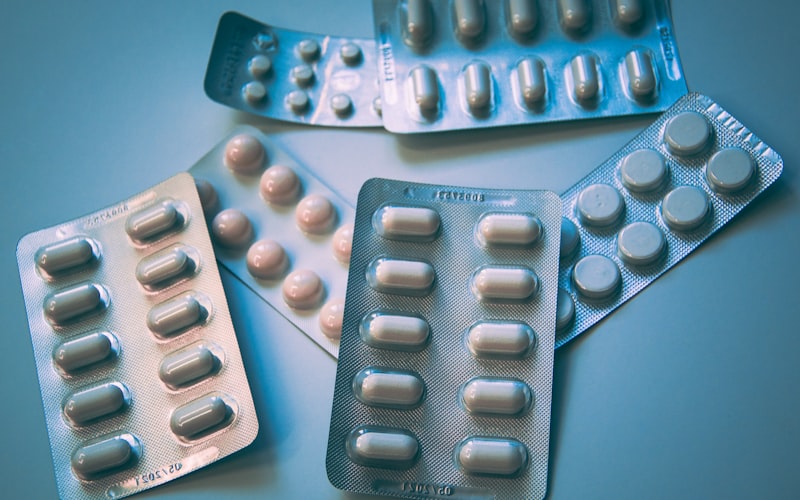
Since 2023, India has shipped medicines, vaccines, and medical equipment to 56 countries as humanitarian aid. Roughly 1,400 metric tonnes, delivered as grants. This is not commerce. It is a choice.
Nauru has twelve thousand people and sits in the middle of the Pacific Ocean, three thousand kilometres from the nearest hospital that can do dialysis. If your kidneys fail in Nauru, there are no machines.
In January 2025, India sent three.
That same season, dialysis machines went to the Marshall Islands, the Solomon Islands, and Palau. Before that, twelve units to Papua New Guinea and one to Samoa. Later, one to Kiribati. Twenty to Djibouti in East Africa. Fifteen to Sierra Leone.
Nine countries received dialysis machines from India in the past two years. The smallest had fewer people than a suburb. None of them represented a commercial market. There was need, and India had the capacity to respond.
The dialysis machines are one thread in a much larger fabric. Since 2023, India’s Ministry of External Affairs Rapid Response Cell has coordinated 84 separate shipments to 56 countries and institutions. Roughly 1,388 metric tonnes of medicines and equipment (where weight was recorded), plus hundreds of thousands of vaccine doses, thousands of diagnostic kits, and specialised items that defy simple measurement.
These shipments are humanitarian aid, not commerce. They sit alongside India’s $31 billion annual pharmaceutical trade but are never counted inside it. This is India giving, not India selling.
Pacific tonnage is low because the shipments are often specialised equipment (dialysis machines, diagnostic kits) rather than bulk medicines. In places with twelve thousand people, one machine changes everything.
When disaster hits, India has a protocol, and often a name. The named operations are military-logistics responses that put medicines on aircraft within days of a crisis. The unnamed ones are no less real.
The single largest consignment: 165 metric tonnes to Malawi after Cyclone Freddy in 2023. Emergency medicines for a country where the storm killed over a thousand people and destroyed health facilities across the southern region.
In the Caribbean, Hurricanes Beryl and Melissa triggered shipments to Jamaica (72 MT across three tranches, including portable BHISHM hospital cubes), Cuba (47 MT), Honduras (26 MT of surgical supplies and IV fluids), and El Salvador (4 MT). A super-typhoon brought 6.5 MT plus a portable hospital cube to the Philippines. Cyclones Fetia and Gyzani brought 12 tonnes to Madagascar. Flash floods: 10 MT to Kenya, 10 MT to Botswana. A volcanic eruption in Papua New Guinea: 17 MT. A landslide in Papua New Guinea’s Enga province: 4 MT. An earthquake in Vanuatu: 10 MT.
Afghanistan alone received over 190 metric tonnes across nine separate shipments between 2023 and 2026: anti-TB medicines, vaccines, heart monitors, ECG machines, a CT scanner, and earthquake-response consignments. In a country where the health system operates at a fraction of capacity, these shipments are the system for many.
Some shipments go where there is no natural disaster, only the human kind.
Anti-cancer drugs to a country at war. Cholera medicines to a country under blockade. Ventilators for people whose lungs were damaged by chemical weapons. The specificity of these shipments tells its own story: someone identified what was needed, and India sent exactly that.
Not all of this makes headlines. Much of India’s health aid is routine, steady, and aimed at diseases that kill slowly rather than suddenly.
Anti-TB medicines went to Afghanistan (93.5 MT), Maldives (2.2 MT), Tuvalu (1 MT), Sao Tome & Principe (2.5 MT), and the Central African Republic (1 MT). Tuberculosis kills 1.3 million people a year. These are the countries that struggle to maintain a steady supply.
ARV and HIV drugs went to Fiji (3.4 MT of anti-retroviral drugs in 2023, with follow-up shipments), Equatorial Guinea (10 MT of ARV drugs and HIV kits), and the Seychelles. In Fiji, India also supplied medicines for the Integrated Management of Childhood Illness programme: 8.5 MT aimed at reducing deaths in children under five.
Vaccines filled gaps that national programmes could not. Bolivia received 300,000 doses of measles and rubella vaccine. Nepal: 17,000 doses of influenza and pneumonia vaccines. Venezuela: 2.7 MT of vaccines for its national vaccination programme. Timor-Leste: 12,000 doses of anti-rabies vaccine and immunoglobulins. Afghanistan received vaccines for rabies, tetanus, hepatitis B, influenza, meningitis, diphtheria, and BCG across multiple tranches, 34 MT in total.
And the Africa CDC partnership: 45.5 MT of essential medicines, protective gear, diagnostic devices, and infection-prevention supplies to support Ebola response across the continent. May and June 2026.
Sometimes the shipment tells you everything about the crisis.
Cameroon, July 2024: 90 MT of active pharmaceutical ingredients, the raw materials for local medicine manufacturing. Not finished pills, but the capacity to make them.
Seychelles, March 2025: 50,000 vials of furosemide injection, a diuretic used in heart failure, kidney disease, and acute fluid overload. The Seychelles has 100,000 people. That is one vial for every two residents.
Indonesia, October 2025: 3,600 Prussian Blue capsules. Prussian Blue is the antidote for cesium-137 radiation poisoning. It binds to radioactive cesium in the gut and prevents absorption. India sent these capsules because Indonesia had a radiation contamination incident and did not manufacture the antidote. Without them, exposure becomes internal.
Mauritius, April 2026: 5,000 HPV sampling kits and diagnostic kits under the Quad Cancer Moonshot Initiative, a collaborative programme between India, Australia, Japan, and the United States to expand early cancer detection in the Indo-Pacific.
Peru, May 2026: Essential medicines and calcium gluconate injections, 3 MT, specifically to support a patient suffering from lead poisoning. One patient. India sent the medicine anyway.
Several of these shipments include a piece of Indian engineering called the BHISHM Cube: Bharat Health Initiative for Sahyog, Hita and Maitri. It is a portable field hospital, pre-packed in a standard shipping container, designed to be airlifted and operational within hours of arrival. Each cube contains medicines, surgical tools, monitoring equipment, and shelter.
BHISHM Cubes have been deployed to Jamaica, Cuba, Sri Lanka, the Philippines, Maldives, and Ukraine. For a Caribbean island hit by a hurricane, or a Pacific nation struck by a typhoon, a pre-packed hospital that arrives by air within days is not a symbol. It is the difference between triage under a tent and structured emergency care.
India became the pharmacy of the world over decades, building factories, training chemists, passing regulations, earning FDA approvals. That story is told on the rest of this site: $31 billion in annual pharmaceutical exports, 1,043 FDA-registered manufacturing plants, medicines shipped to 213 countries as commerce.
This page tells a different story. It is about what happens when a country with that capacity looks at a place where the market offers nothing. An island of twelve thousand people that needs a dialysis machine. A war zone that needs anti-cancer drugs. A school where children need measles vaccines. India sends the medicine anyway.
Fifty-six countries. Eighty-four shipments. Roughly 1,400 metric tonnes. Since 2023.
This is not a trade story. It is a choice India keeps making.
Source: Ministry of External Affairs, Rapid Response Cell. “Health Supplies Grant Assistance, since 2023 (Territorial Division wise),” updated 2 June 2026. All entries verified against the MEA source document. 84 records, 56 recipient countries and institutions, across 14 territorial divisions.